
In short: both yards at this Lynnwood home were bare, uneven soil. We cleared and graded them so water drains away from the house, trenched and installed an underground sprinkler system, spread and raked topsoil, and rolled out new sod front and back. With automatic watering in place, the lawn rooted in through the first dry summer.
Project facts
- Location: Lynnwood, WA
- Type of work: Drainage, Excavation & Landscaping
- Highlights: Graded to shed water · Underground sprinkler system · New sod front and back
Before and after
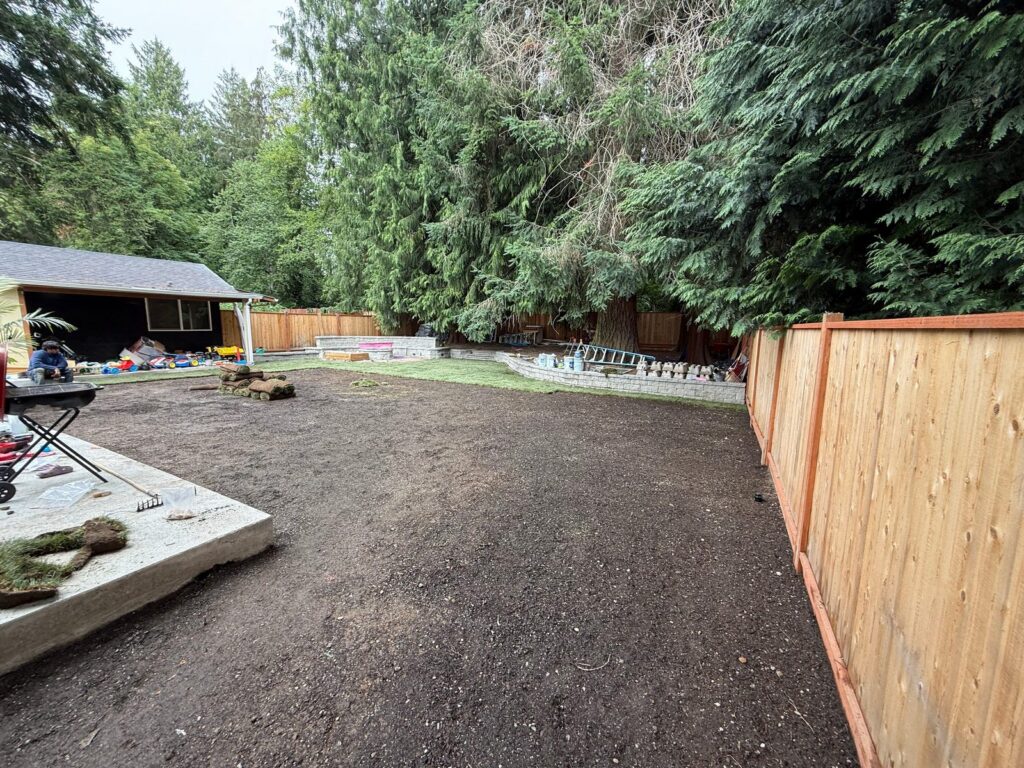
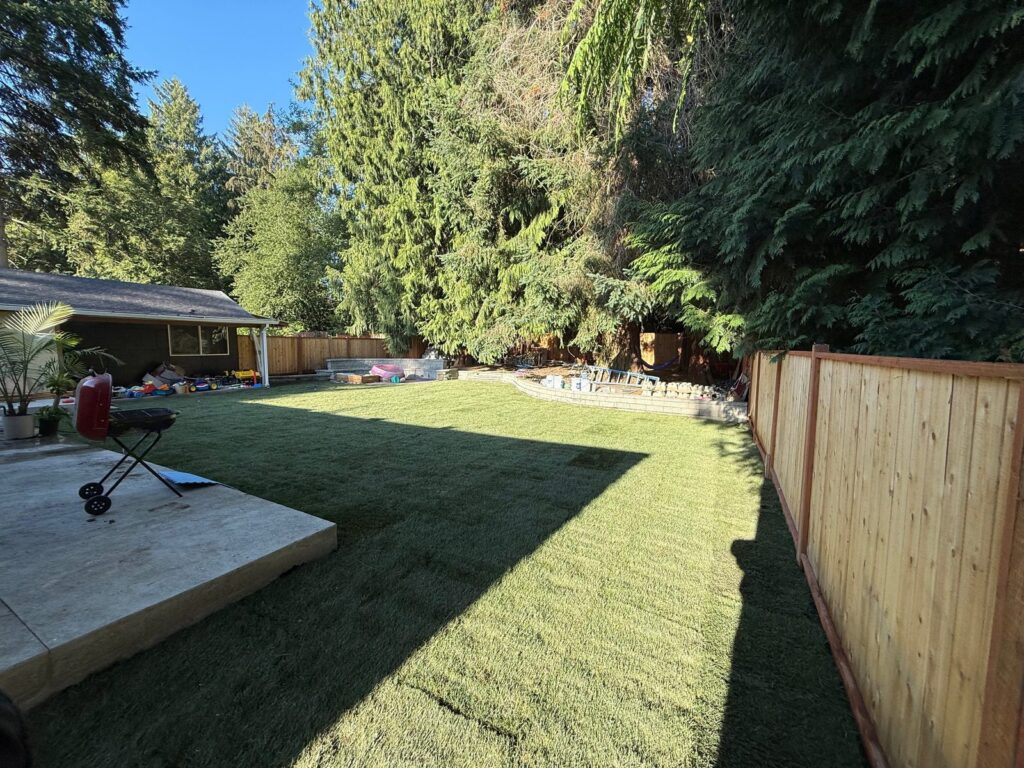
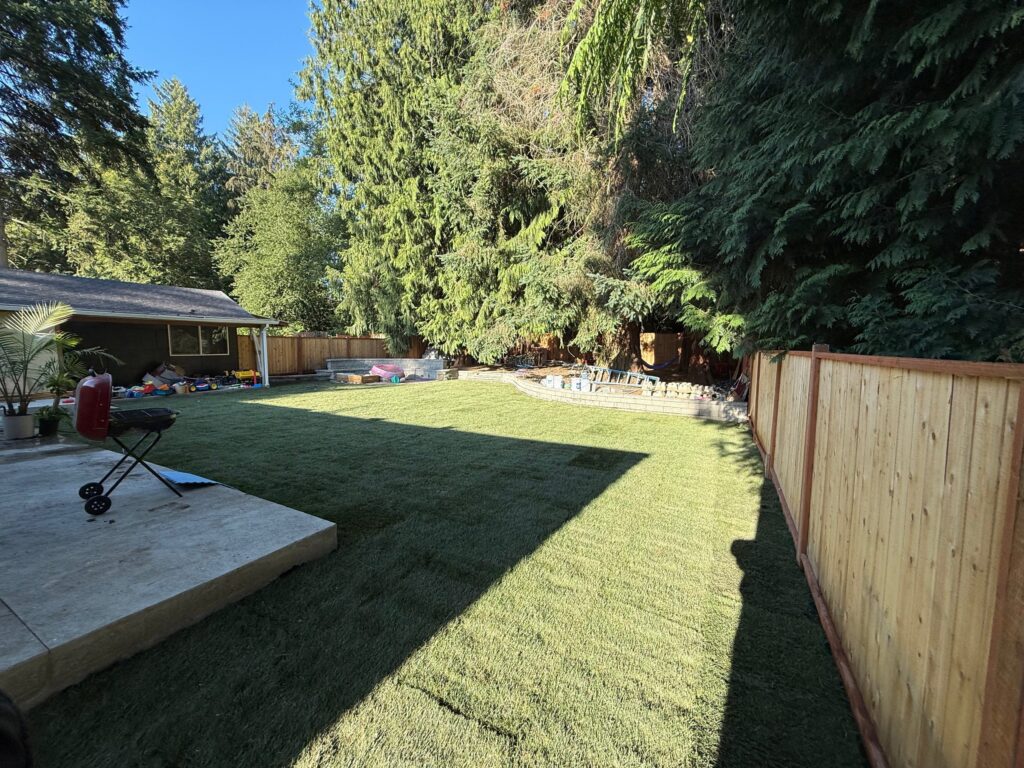
The backyard after grading and the finished lawn
Why grading comes first
In western Washington, water is the main enemy of both lawns and foundations. Before any grass, the ground should slope away from the house so rain moves toward the yard edges or a drain, not toward the crawl space. Low spots where water sits turn into mud and moss. We set the grade first, then build everything else on it.
How we did it, step by step
1. Clear and grade
Debris and old turf came out, the soil was loosened, and the yards were shaped to fall away from the house.
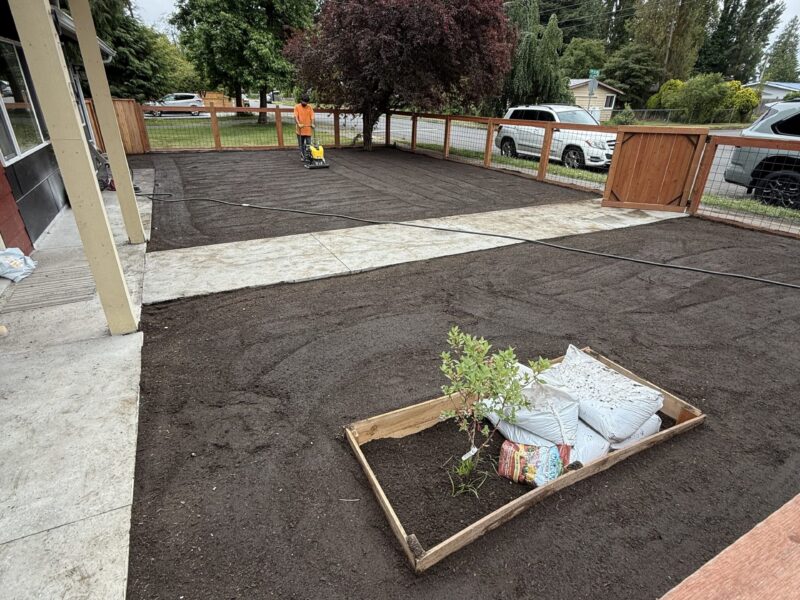
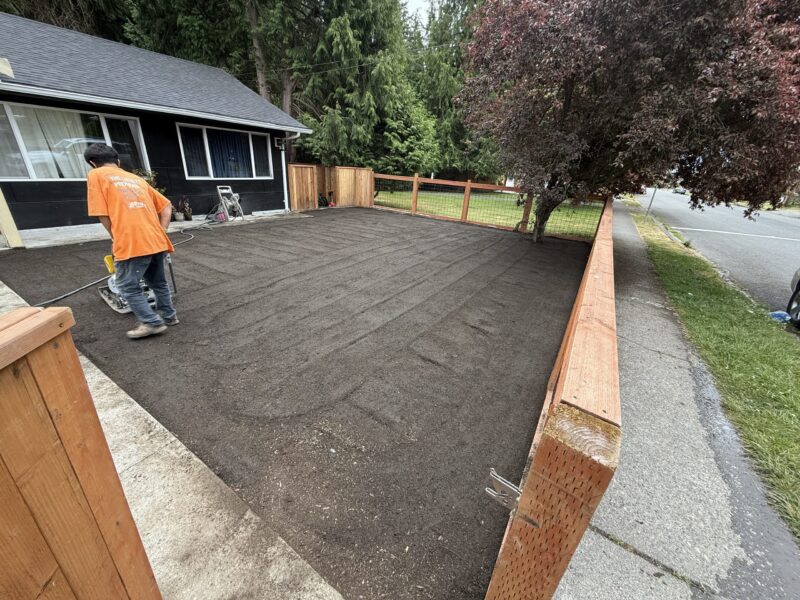
Front yard cleared and graded
2. Trench and install the sprinkler system
Trenches carry the supply pipe to each zone. The system is connected to the water supply through a backflow preventer, which keeps irrigation water from flowing back into the home’s drinking water. Heads are spaced so their spray overlaps evenly (“head-to-head coverage”), which avoids dry patches.
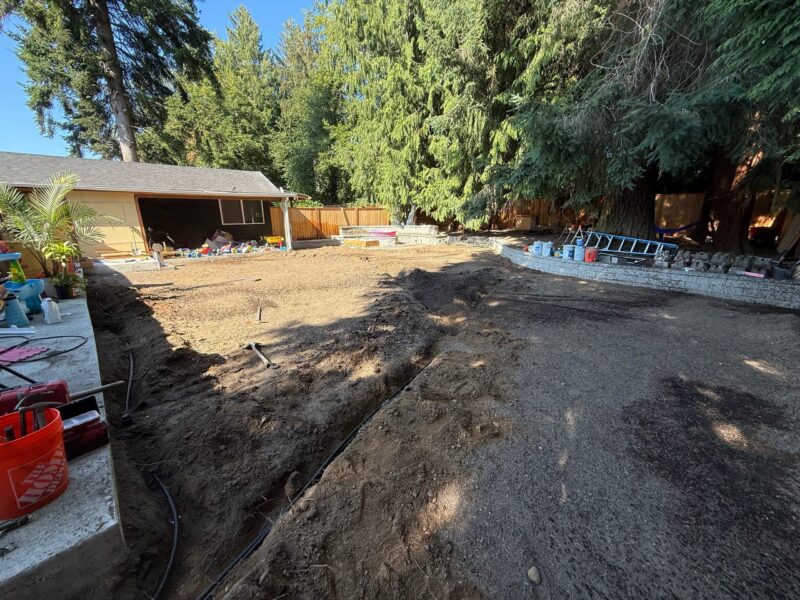
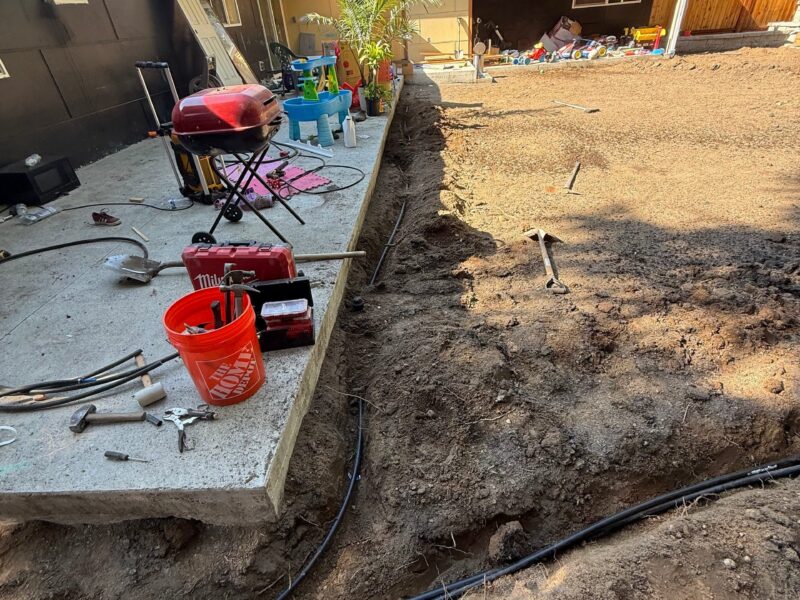
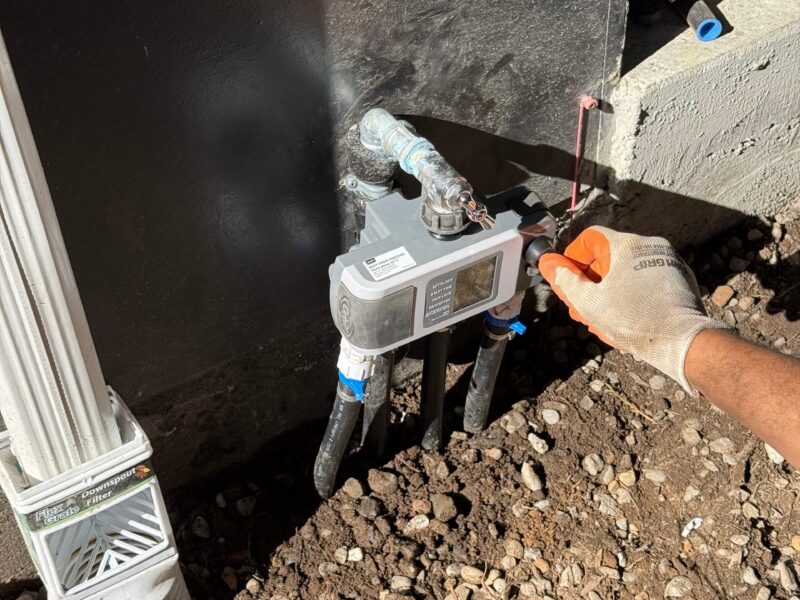
Trenching, laying pipe and connecting the supply
3. Topsoil and sod
Topsoil was spread and raked smooth, then sod was laid in a staggered pattern with tight seams, rolled for contact and watered in right away.
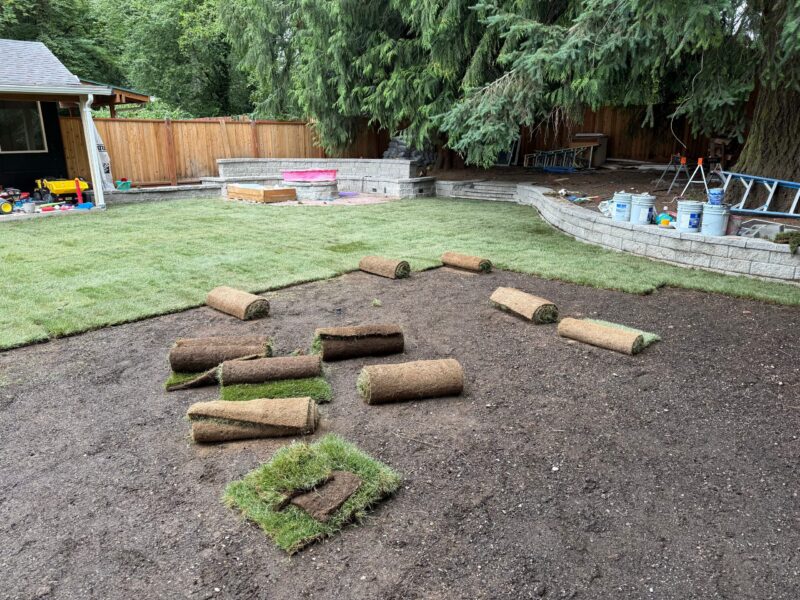
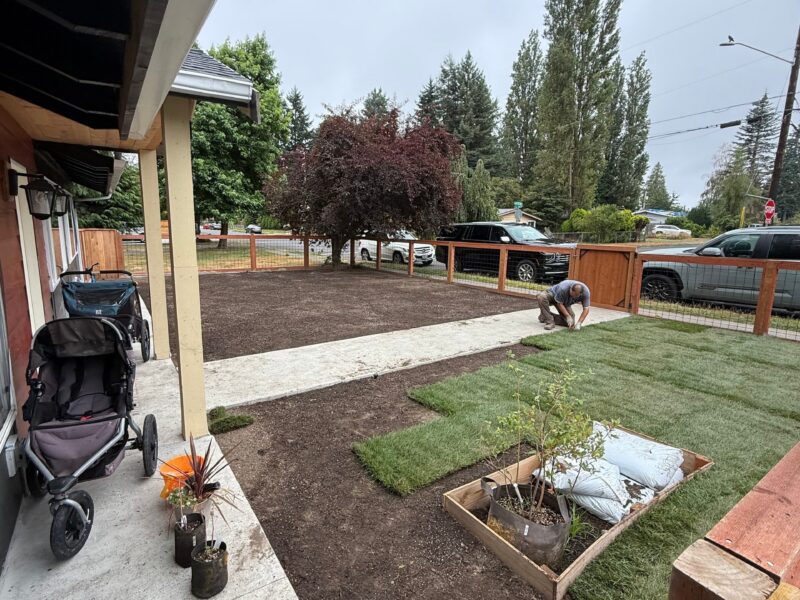
Sod rolls going down in the back and front yards
Sod or seed?
| Sod | Seed | |
|---|---|---|
| Time to a usable lawn | A few weeks of rooting | A season or more |
| Up-front cost | Higher | Lower |
| Erosion and mud | Covers soil immediately | Bare soil until it fills in |
| Best timing here | Spring and early fall; summer with irrigation | Early fall or spring |
What it costs in 2026
Lawn and irrigation jobs are priced from a site visit because yard size, soil and water supply vary so much. Related labor lines from our 2026 price guide (labor only; materials are priced separately):
| Work | 2026 price (labor) |
|---|---|
| French drain in prepared trench | $15–$30 / linear ft |
| Erosion control installation | $3–$6 / linear ft |
| Concrete demolition | $3.75–$5 / sq ft |
Start with the drainage and sitework estimator or request a free walkthrough.
Permits in Lynnwood
New irrigation connected to the water supply usually needs a plumbing permit for the backflow assembly, and many water providers require the backflow device to be tested after installation. Large grading jobs can also need a permit. Check Lynnwood’s Guide to Getting a Permit. We confirm at the walkthrough.
Common questions
How often should new sod be watered?
Daily, sometimes twice, for the first couple of weeks, then less often and deeper as roots grow. A programmed controller makes this easy.
Do I really need a sprinkler system in Seattle’s climate?
Our summers are dry. Without watering, most lawns go dormant in July and August. A system also waters evenly, which hand watering rarely does.
Can sprinklers be added to an existing lawn?
Yes. Narrow trenches are cut through the turf and closed back up.
Will the grading fix water in my crawl space?
Grading helps a lot. Gutters, downspout drains and sometimes a French drain may be needed too.
Planning something similar?
Get a price range in minutes with our Instant Estimate, then book a free on-site walkthrough to confirm it.
Washington Registered General Contractor · Reg. #TATCOCC742K9 · UBI 605-917-280